



















Choosing a sandbox runtime for long-lived coding agents
How we evaluated sandbox providers for coding agents, what we chose for now, and the trade-offs behind that decision.
orchestrators
This article contrasts ZenML and Airflow to emphasize which platform aligns best with your requirements for scalability, user-friendliness, and comprehensive functionality. Uncover the primary distinctions that will optimize your ML workflows and accelerate your project progress.
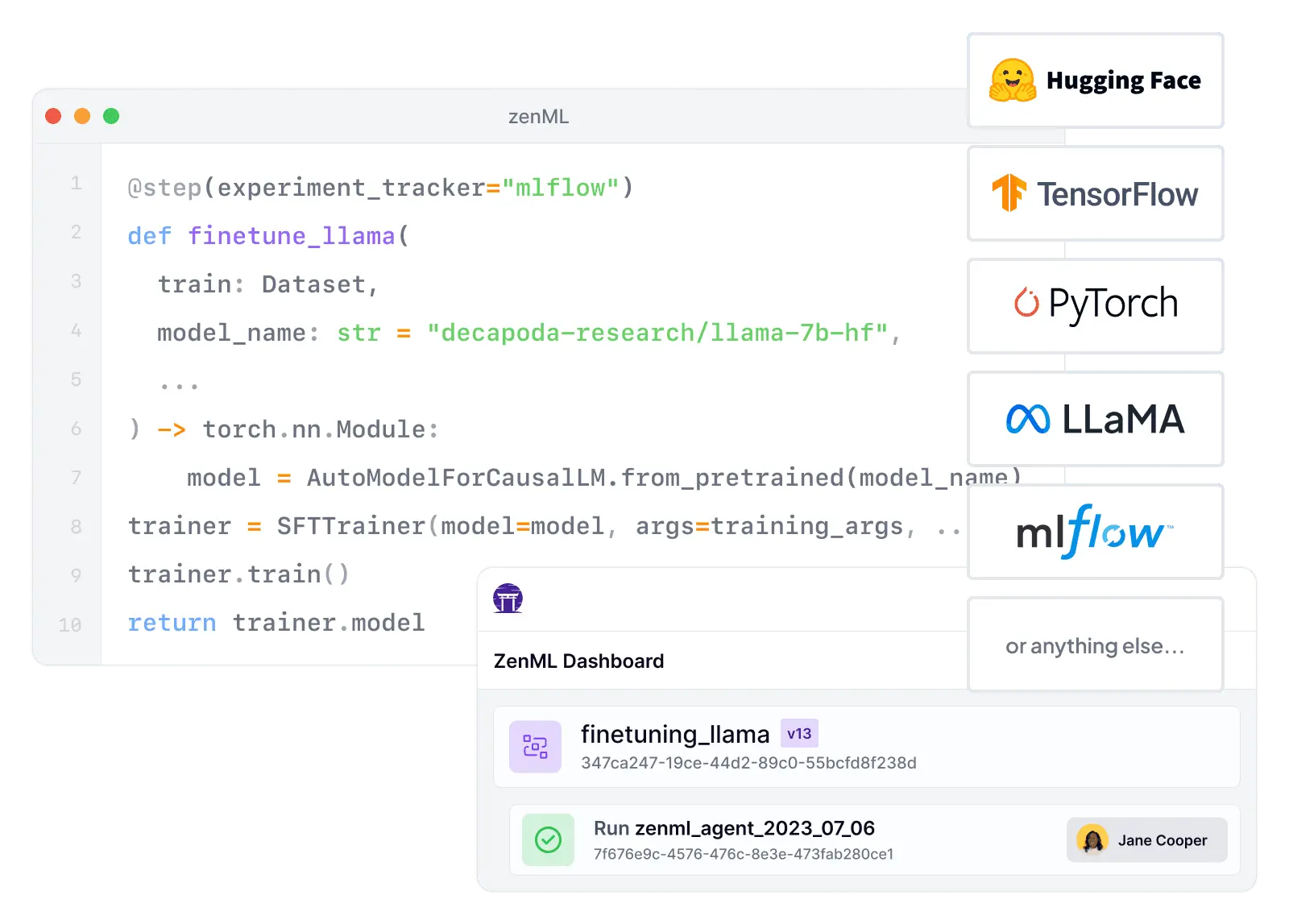
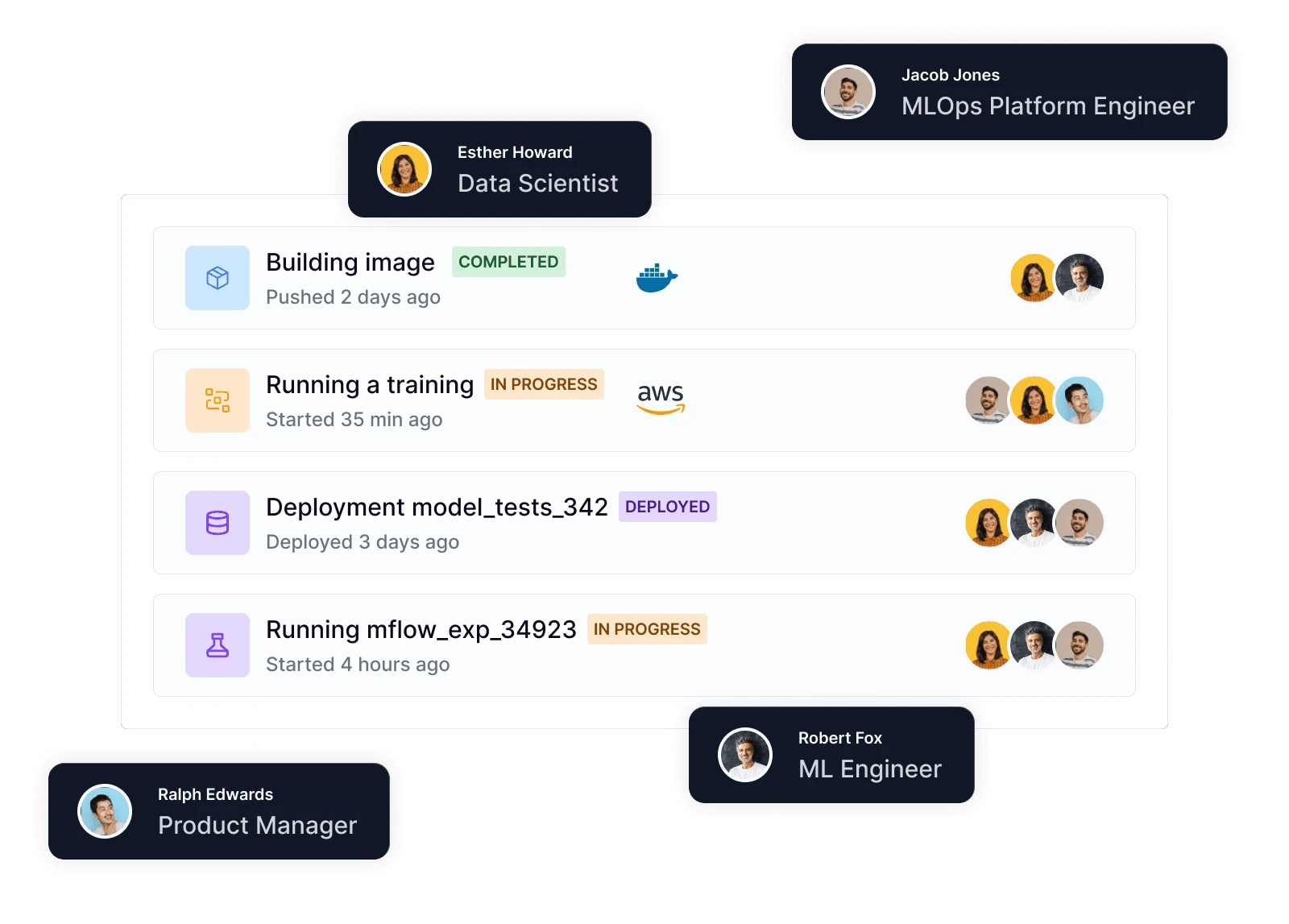
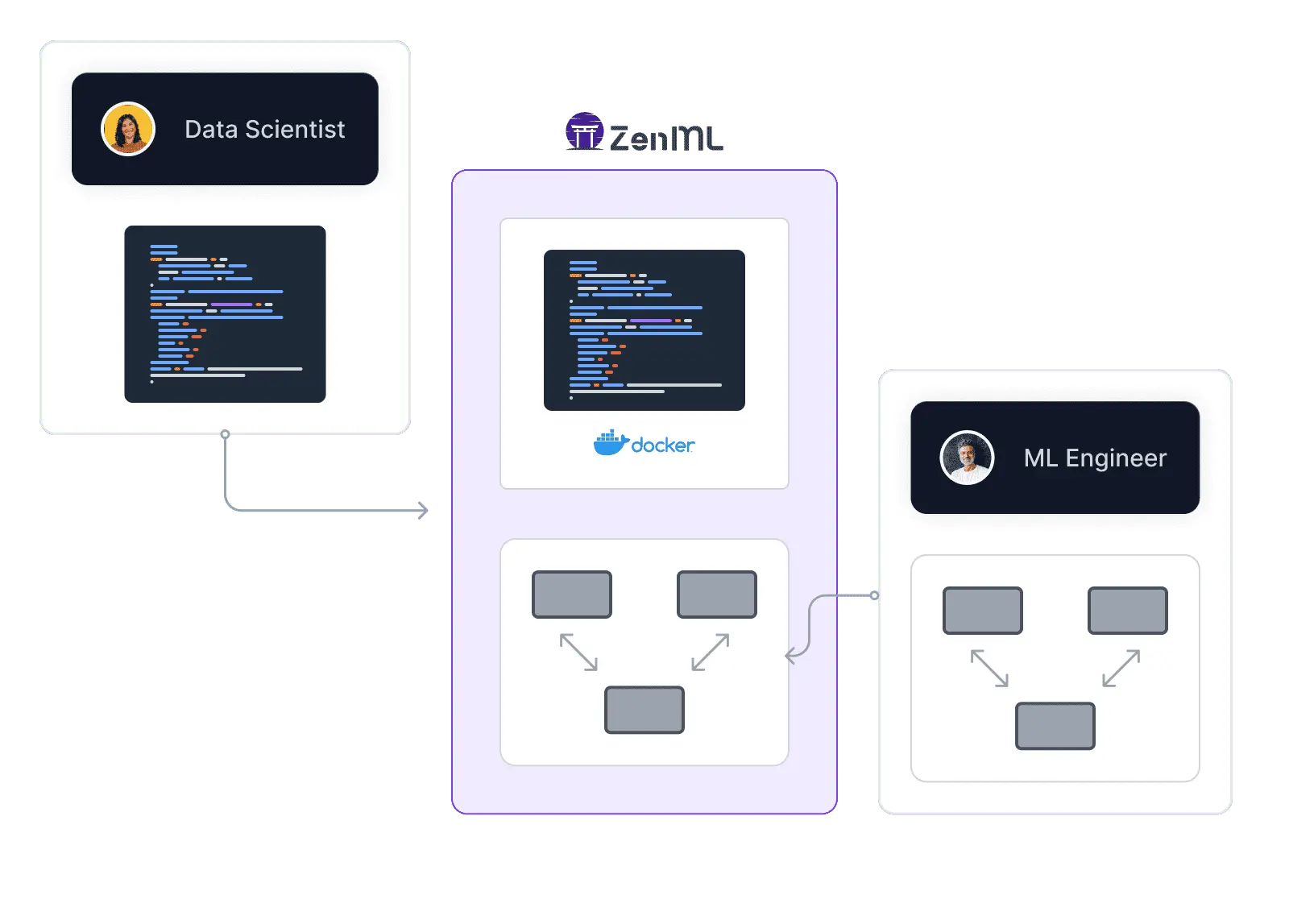

ZenML allows orchestrating ML pipelines independent of any infrastructure or tooling choices. ML teams can free their minds of tooling FOMO from the fast-moving MLOps space, with the simple and extensible ZenML interface. No more vendor lock-in, or massive switching costs!

Richard Socher
Former Chief Scientist Salesforce and Founder of You.com
| Feature | ZenML | Apache Airflow |
|---|---|---|
| ML Experiment Tracking | Yes Built-in experiment tracking tailored for ML workflows | Not supported Limited native experiment tracking, often requires third-party tools |
| Data Versioning | Yes Native data versioning for reproducibility and lineage | Not supported Limited built-in data versioning capabilities |
| ML Deployment | Yes Streamlined deployment of ML models to production | Not supported Deployment of ML models can be complex, requiring additional setup |
| Integration Flexibility | Yes Seamless integration with ML frameworks and tools out-of-the-box | Yes Flexible but may require more setup for ML-specific tools |
| ML-Centric Design | Yes Purpose-built for machine learning projects end-to-end | Not supported General purpose workflow orchestration, not ML-native |
| Scalability | Yes Designed to scale ML workloads with minimal overhead | Yes Scalable, but may require additional setup and configuration |
| Collaboration | Yes Collaborative features tailored for ML teams | Not supported Basic collaboration through shared repositories and workflows |
Code comparison
# ZenML pipeline syntax
from zenml import pipeline, step

@step
def data_preprocessing(data):
    ... # preprocessing logic

@step
def model_training(preprocessed_data):
    ... # model training logic

@pipeline
def ml_pipeline(data):
    preprocessed_data = data_preprocessing(data)
    trained_model = model_training(preprocessed_data)
return trained_model# Airflow DAG syntax
from airflow import DAG
from airflow.operators.python import PythonOperator
from datetime import datetime, timedelta
default_args = {
'owner': 'airflow',
'depends_on_past': False,
'start_date': datetime(2023, 1, 1),
'email_on_failure': False,
'email_on_retry': False,
'retries': 1,
'retry_delay': timedelta(minutes=5),
}
def data_preprocessing(**kwargs):
... # preprocessing logic
def model_training(**kwargs):
... # model training logic
with DAG('ml_pipeline', default_args=default_args, schedule_interval=timedelta(days=1)) as dag:
preprocess_task = PythonOperator(
task_id='preprocess_data',
python_callable=data_preprocessing,
)
train_model_task = PythonOperator(
task_id='train_model',
python_callable=model_training,
)
preprocess_task >> train_model_taskZenML guarantees swifter initialization, surpassing orchestrators for prompt, optimized ML workflows.
ZenML is a native interface to the whole end-to-end machine learning lifecycle, taking you beyond just orchestration.
ZenML excels with dedicated support, offering personalized assistance beyond standard orchestrators.
Orchestrator Showdown

ZenML is an open-source alternative to Argo Workflows for ML pipelines with built-in metadata, lineage, and reproducibility

Dagster alternative: Streamline ML ops with intuitive pipelines. Seamless integrations and experiment tracking for efficient ML workflow management.
Databricks alternative: Flexible ML orchestration without vendor lock-in. Accelerate ML with lightweight, adaptable workflows across multiple clouds.

Flyte alternative: Agile ML pipeline orchestration. Accelerate workflows with intuitive tools, seamless MLOps integration, and rapid iteration.

Kedro alternative: Scalable, user-friendly ML framework. Streamline operations with robust features for efficient project management and deployment.

Kubeflow alternative: Lightweight ML pipeline management. Simplify MLOps with flexible, user-friendly workflows across various environments.

Prefect alternative: ML-centric pipeline orchestration. Streamline workflows with intuitive design, experiment tracking, and MLOps integrations.
How we evaluated sandbox providers for coding agents, what we chose for now, and the trade-offs behind that decision.
The new Kitaru turns production traces you already collect into replayable test scenarios, expert-reviewed cohorts, and evaluators you can run on every change.
Robotics compute is spreading across clouds and clusters. Learn how one portable pipeline layer can keep the robot-learning loop reproducible.
See ZenML's superior model orchestration in action Discover how ZenML offers more with your existing ML tools Find out why data security with ZenML outshines the rest