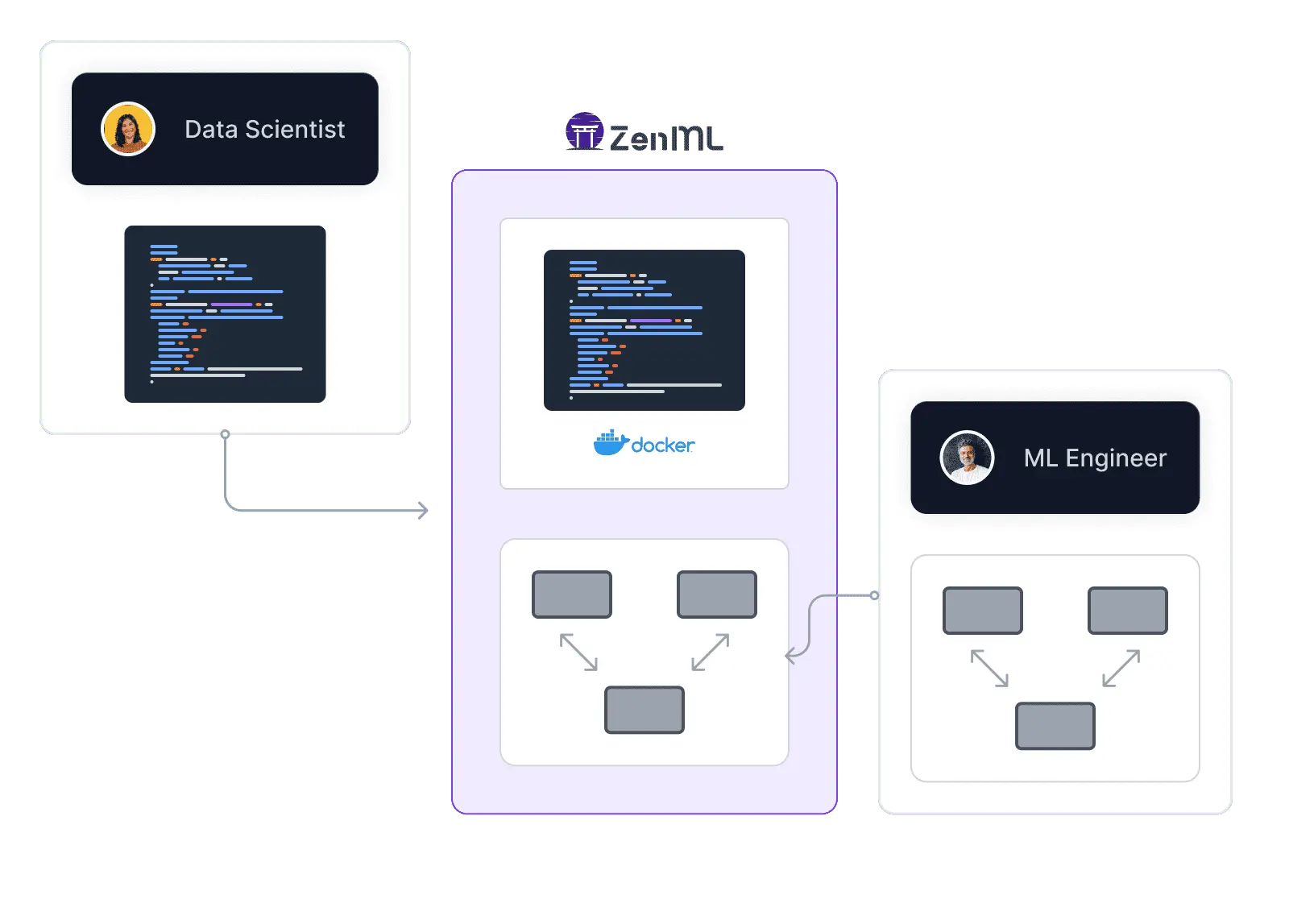
| Workflow Orchestration | ZenML is built to orchestrate multi-step ML pipelines across environments using swappable stack components, not just reproduce local command graphs. | DVC provides lightweight DAG execution via dvc.yaml + dvc repro, but it's primarily local and relies on external schedulers/CI for production orchestration. |
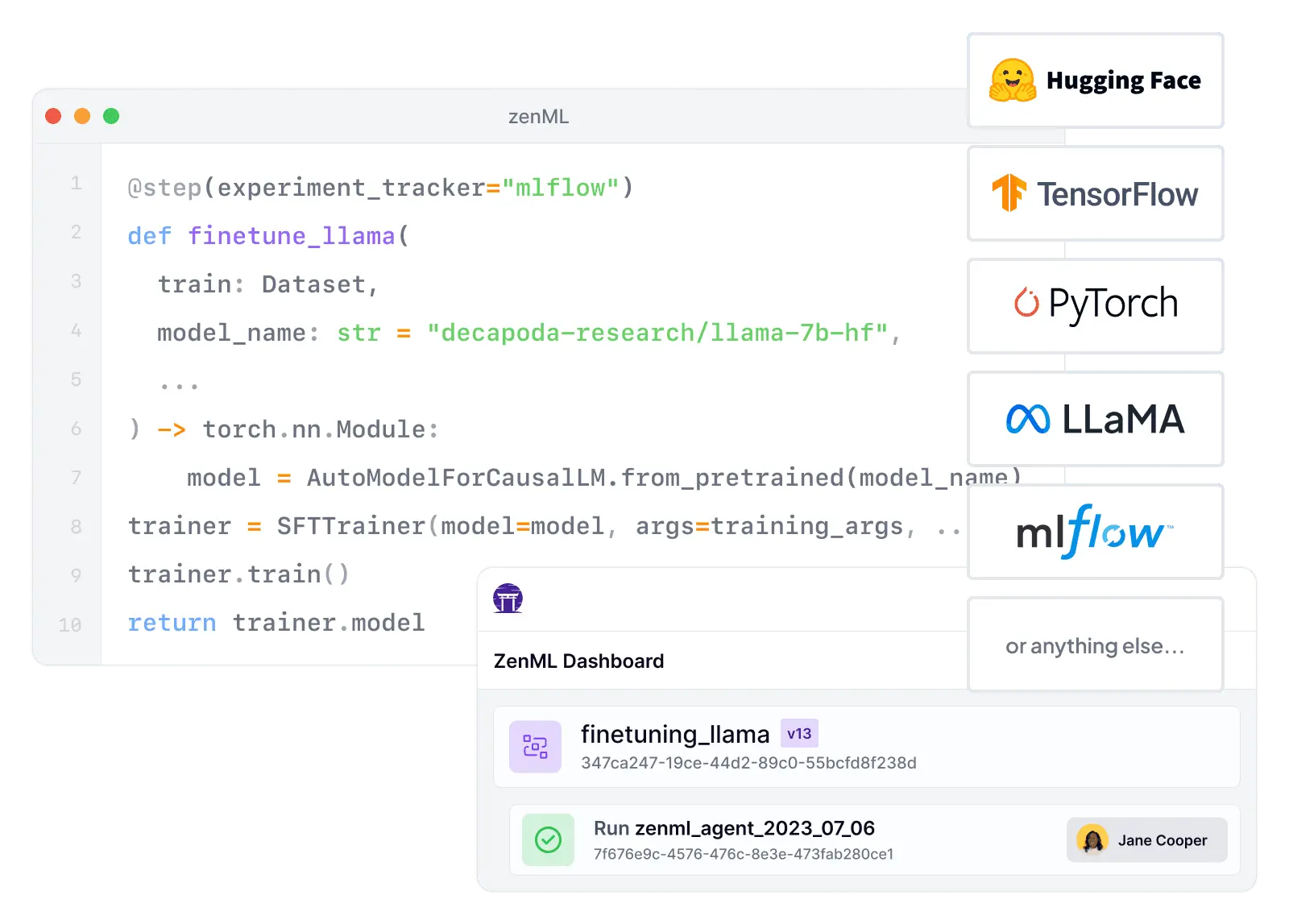
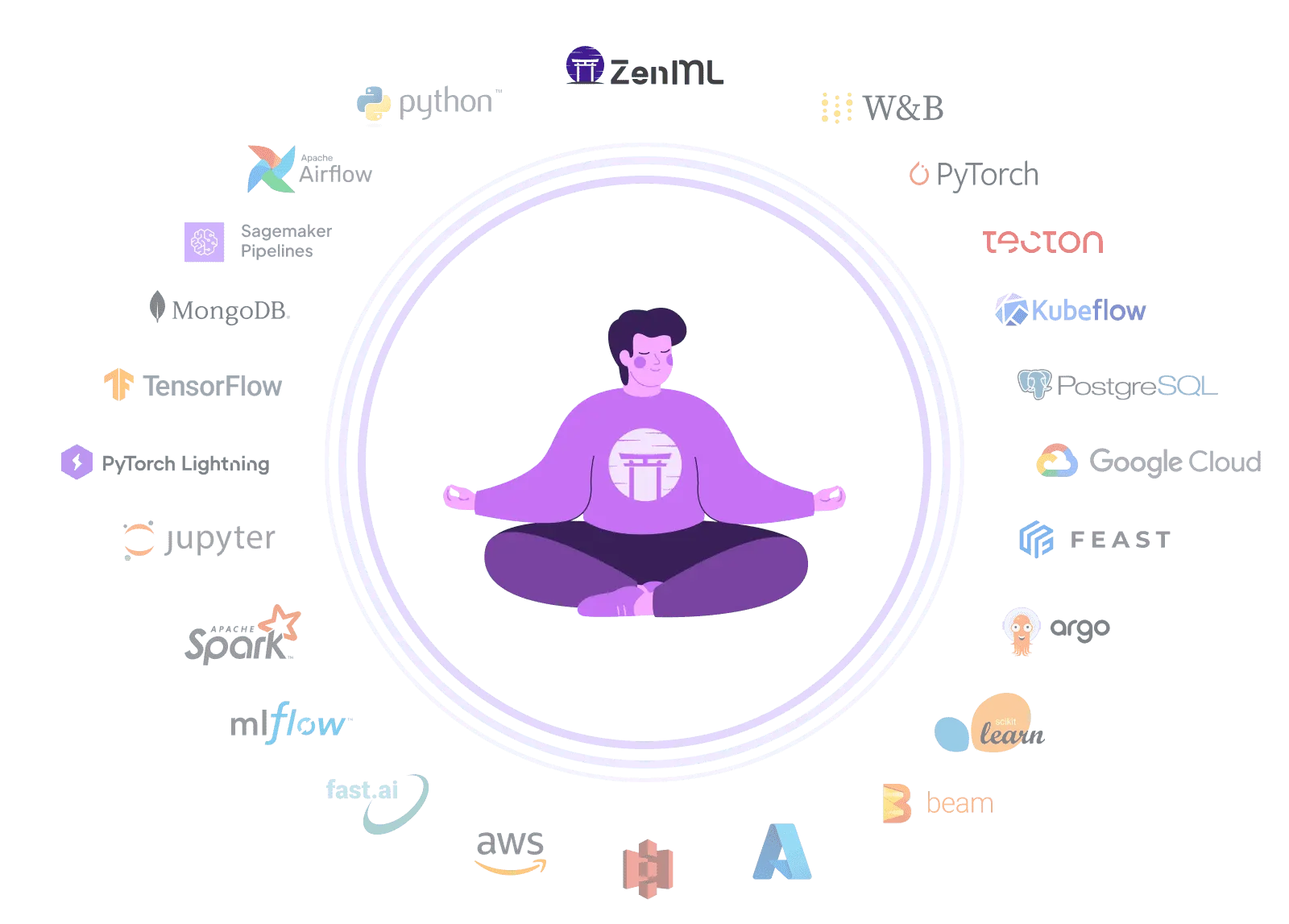
| Integration Flexibility | ZenML's stack architecture is designed to plug in best-of-breed tools (orchestrators, trackers, deployers, registries) without rewriting pipelines. | DVC integrates well with Git and storage backends, but doesn't offer a composable stack of interchangeable orchestration/deployment/monitoring components. |
| Vendor Lock-In | ZenML is cloud-agnostic by design: it can run on multiple clouds or on-prem by swapping stack components. | DVC core is Apache-2.0 OSS and can use many storage systems as remotes; DVC Studio is optional for teams that want a hosted UI. |
| Setup Complexity | ZenML can start locally quickly and scales by adding stack components incrementally as teams grow. | DVC is easy to bootstrap in an existing repo: install the CLI, dvc init, and optionally configure a remote; no server component is required. |
| Learning Curve | ZenML's learning curve pays off for teams building repeatable production pipelines with stacks, artifacts, and metadata concepts. | DVC's mental model maps closely to Git + build tools: version artifacts with pointers, define stages in dvc.yaml, and reproduce with dvc repro. |
| Scalability | ZenML scales by delegating execution to production orchestrators and managed services while keeping pipeline code portable across environments. | DVC scales well for large datasets via remotes and caching, but production workload orchestration typically requires pairing DVC with CI systems or other orchestrators. |
| Cost Model | ZenML's OSS core is free; managed offerings shift cost from infra/time to subscription for teams needing centralized governance and collaboration. | DVC core is free OSS (Apache-2.0); DVC Studio offers a free tier for individuals/small teams with paid options for larger teams. |
| Collaboration | ZenML emphasizes team collaboration through shared stacks, centralized metadata/lineage, and integration points for registries and dashboards. | DVC collaboration is Git-native (branches/PRs) and enhanced by DVC Studio, which adds experiment visualization, sharing, and team features. |
| ML Frameworks | ZenML integrates across many ML libraries and platforms while standardizing how artifacts/metadata flow through pipelines. | DVC is framework-agnostic (stages are commands), and DVCLive provides built-in integrations across many popular ML frameworks. |
| Monitoring | ZenML connects the training pipeline to production concerns including deployment and downstream monitoring integrations as part of an MLOps stack. | DVC focuses on tracking training-time experiments, metrics, and artifacts; it does not provide production inference monitoring out of the box. |
| Governance | ZenML's centralized metadata, lineage, and reproducibility primitives are designed to support governance requirements across environments and teams. | DVC provides strong auditability via Git history, but enterprise governance (RBAC, policy enforcement, audit workflows) depends on Git hosting and optional Studio features. |
| Experiment Tracking | ZenML can integrate with dedicated experiment trackers and also tracks pipeline runs and artifacts in a metadata store for end-to-end lineage. | Experiment tracking is a core DVC strength: experiments are stored as custom Git refs, runnable via dvc exp run, and enhanced with DVCLive + DVC Studio. |
| Reproducibility | ZenML provides reproducibility through tracked artifacts, caching, and lineage in a metadata store, even when execution moves across environments. | Reproducibility is foundational: DVC pipelines capture dependencies/outputs and reproduce results with dvc repro, with data/models versioned via cache + remotes. |
| Auto-Retraining | ZenML is designed for scheduled/triggered pipelines using orchestrators and CI/CD integrations, enabling automated retraining patterns. | DVC can participate in auto-retraining when paired with CI schedulers and CML, but does not provide a native always-on retraining orchestrator. |