ZenML
Compare ZenML vs

Portable ML Pipelines Without GCP Lock-In

If you're standardizing on GCP, Vertex AI Pipelines offers a managed, deeply integrated workflow experience. But if your infrastructure strategy is multi-cloud or evolving, ZenML helps you build pipelines that aren't tied to a single provider. Run on Vertex now, and keep your options open for AWS, Azure, or on-prem later. Compare ZenML's composable, cloud-agnostic stack architecture against Vertex AI's GCP-native orchestration suite.

ZenML
vs
Vertex AI

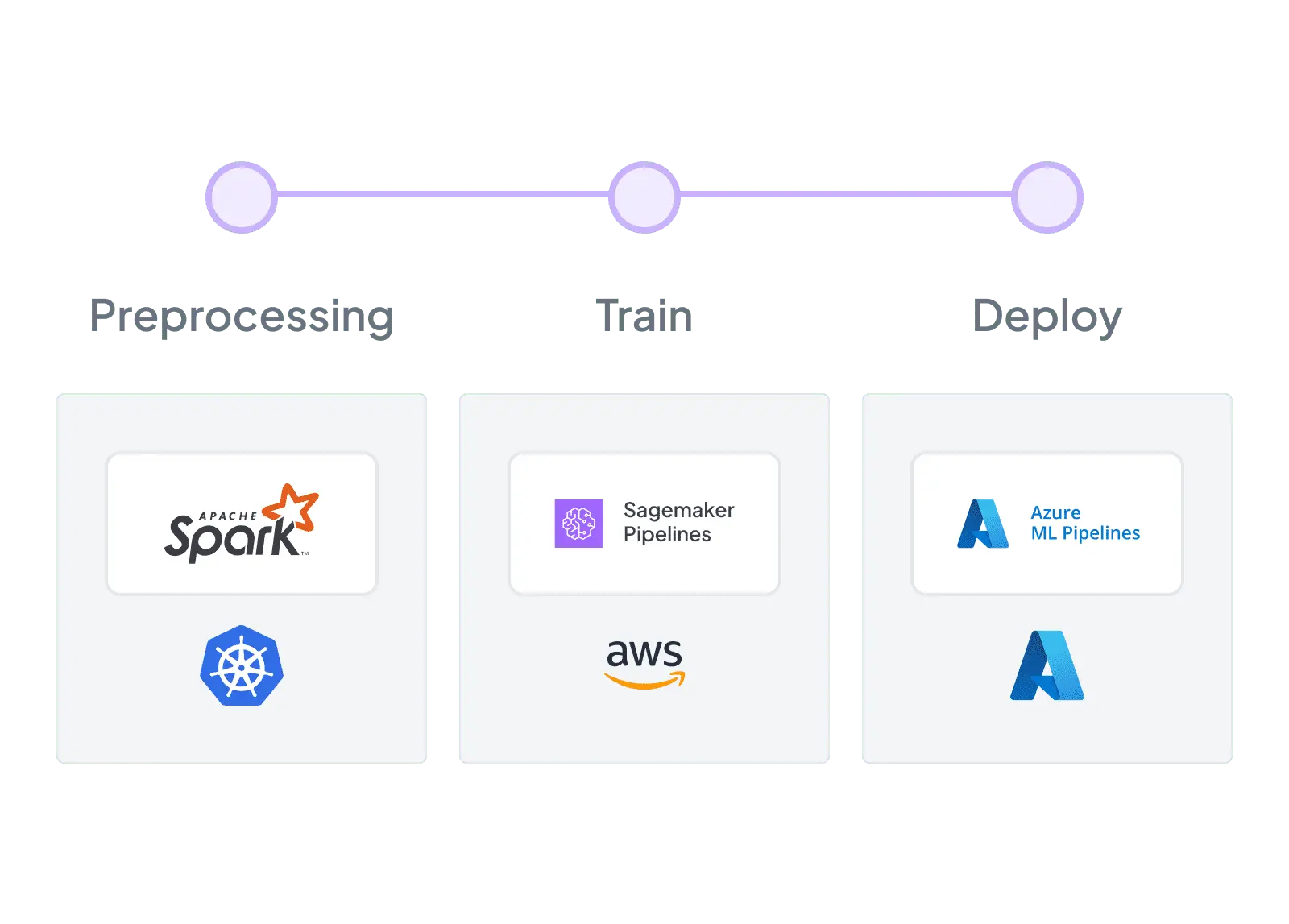
Run the same workloads on any cloud to gain strategic flexibility

  • ZenML does not tie your work to one cloud.
  • Define infrastructure as stack components independent of your code.
  • Run any code on any stack with minimum fuss.
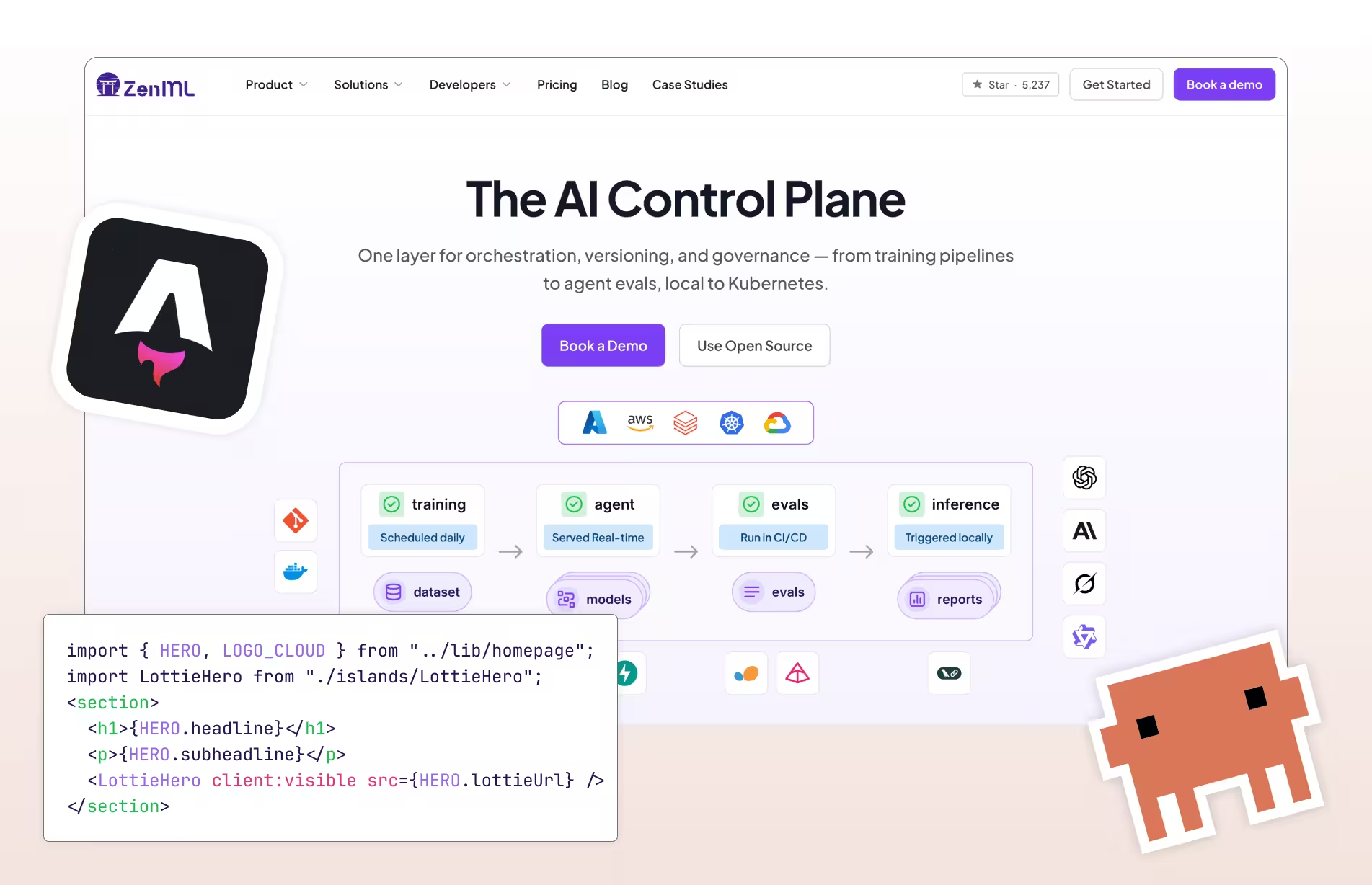
Dashboard mockup showing vendor-neutral architecture

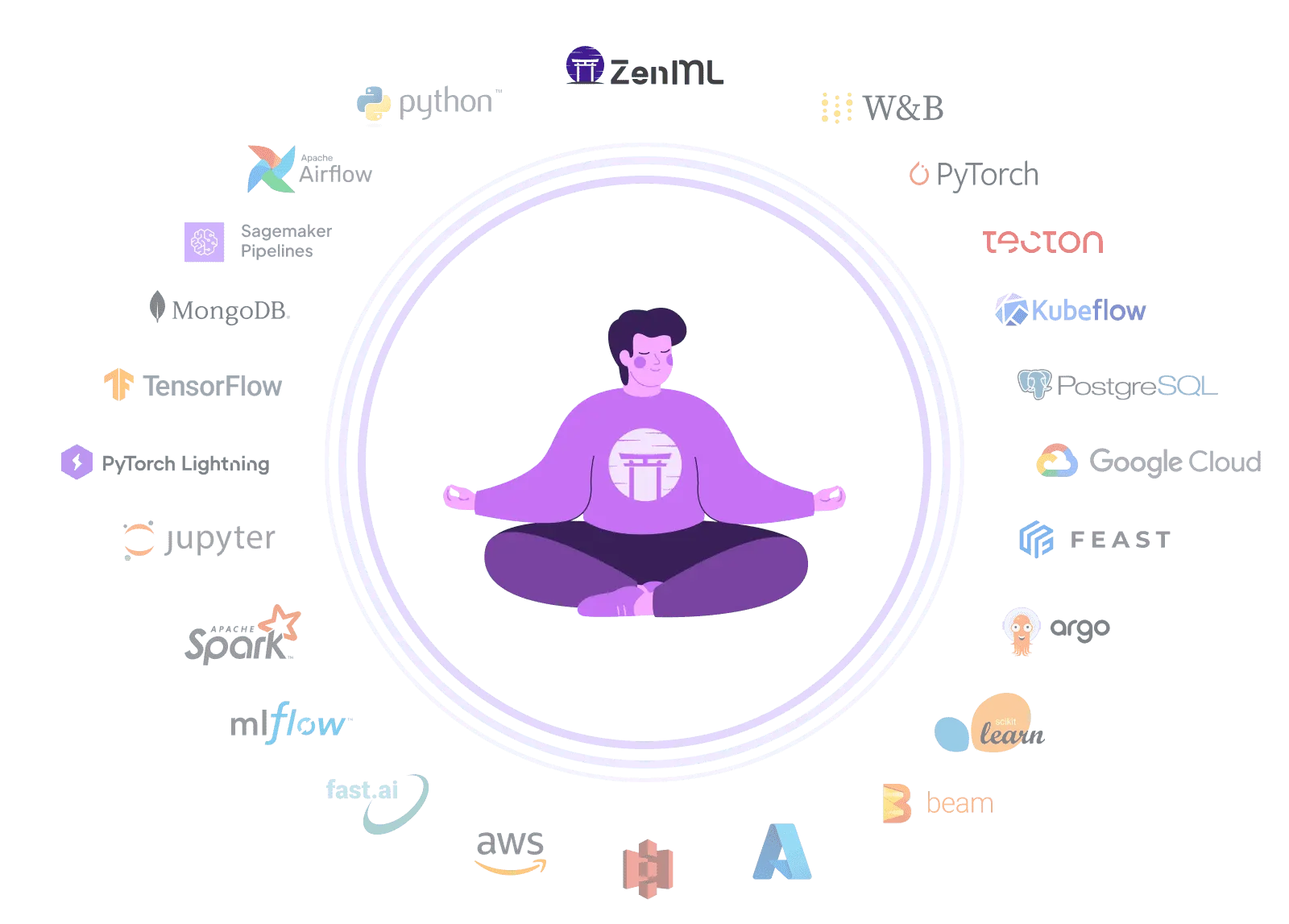
50+ integrations with the most popular cloud and open-source tools

  • From experiment trackers like MLflow and Weights & Biases to model deployers like Seldon and BentoML, ZenML has integrations for tools across the lifecycle.
  • Flexibly run workflows across all clouds or orchestration tools such as Airflow or Kubeflow.
  • AWS, GCP, and Azure integrations all supported out of the box.
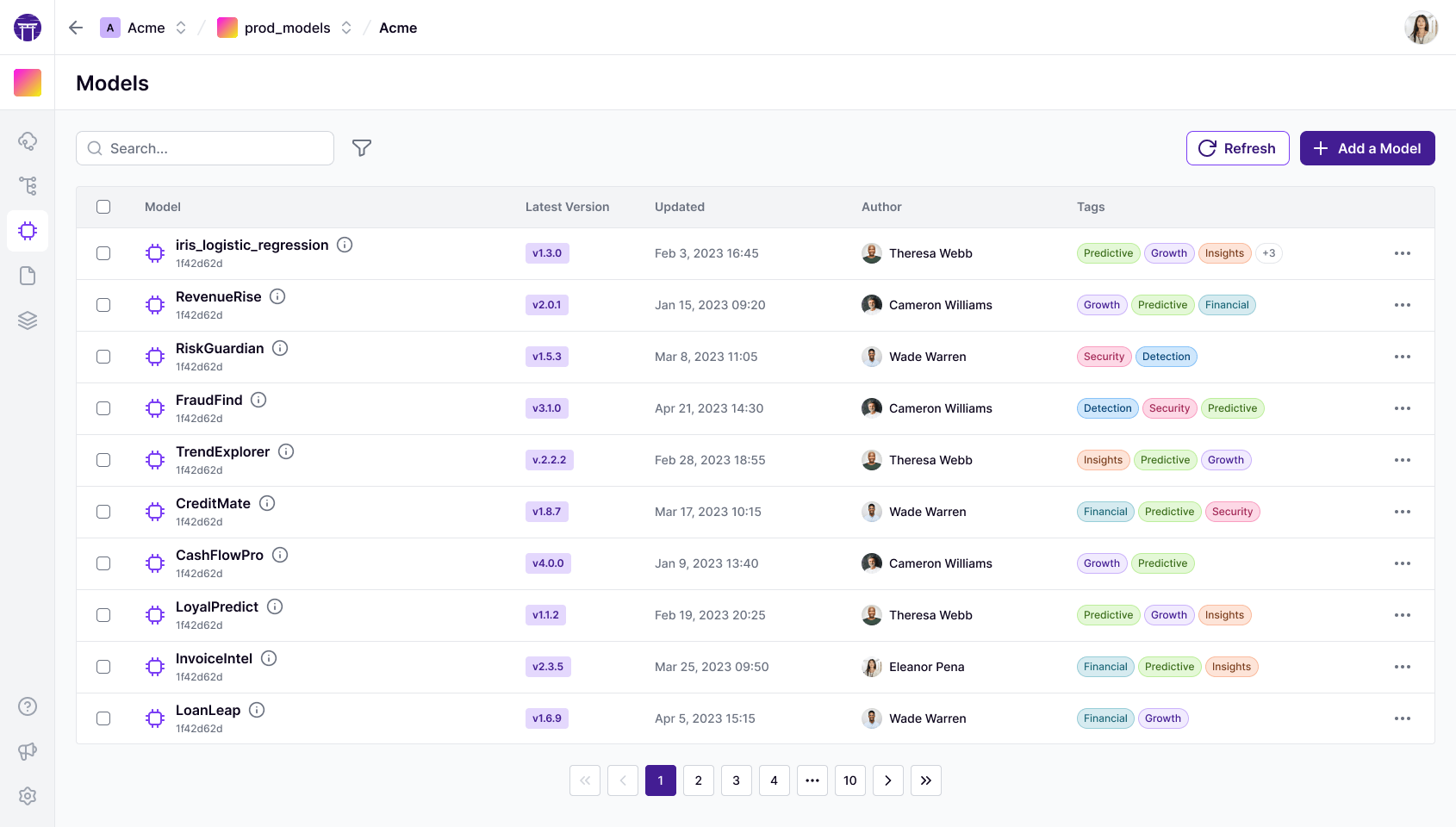
Dashboard mockup showing integrations

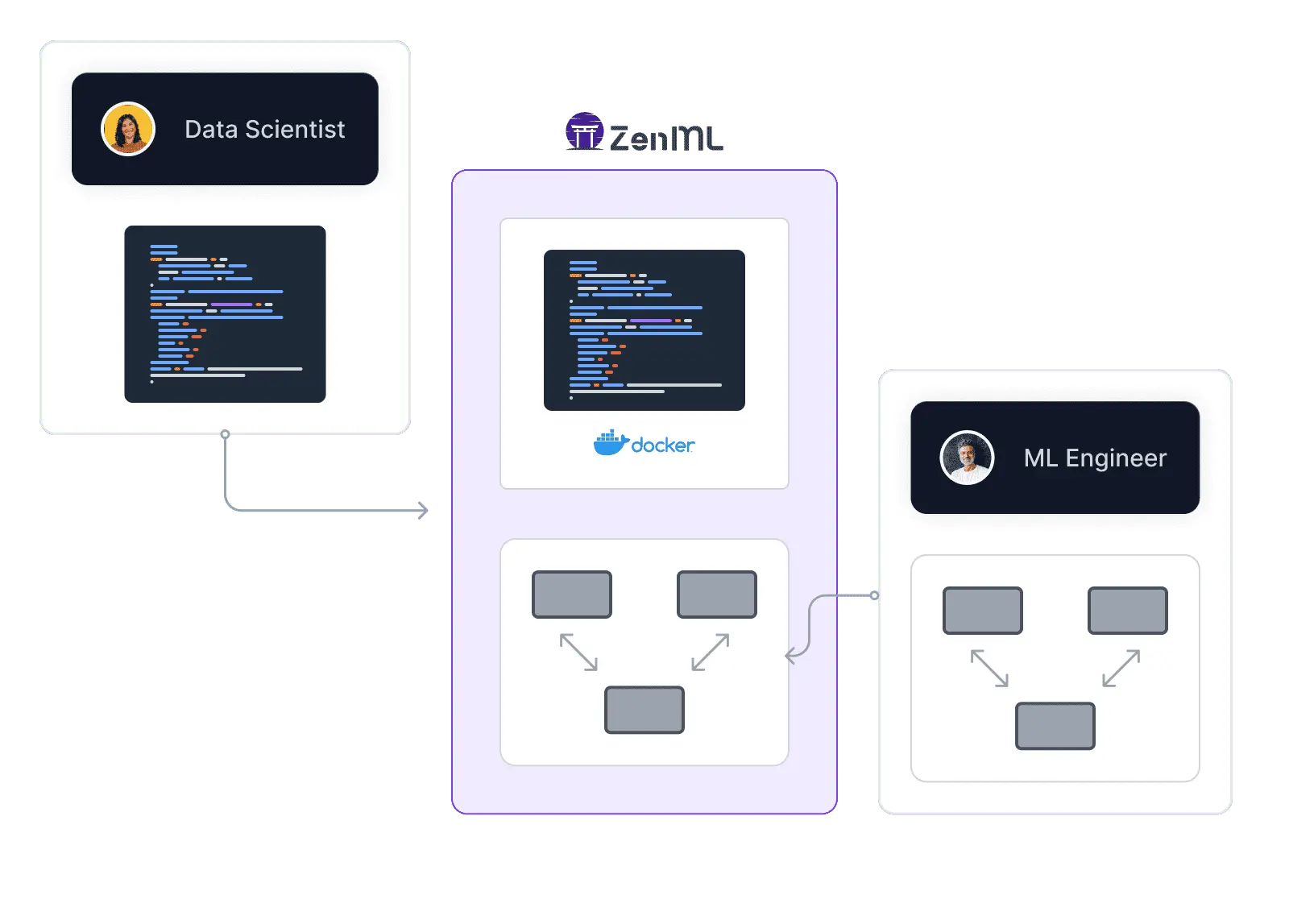
Avoid getting locked in to a vendor

  • Avoid tangling up code with tooling libraries that make it hard to transition.
  • Easily set up multiple MLOps stacks for different teams with different requirements.
  • Switch between tools and platforms seamlessly.
Dashboard mockup showing productionalization workflow
“ZenML has proven to be a critical asset in our machine learning toolbox, and we are excited to continue leveraging its capabilities to drive ADEO's machine learning initiatives to new heights”
François Serra

François Serra

ML Engineer / ML Ops / ML Solution architect at ADEO Services

Company logo

Feature-by-feature comparison

Explore in Detail What Makes ZenML Unique

Feature
ZenML ZenML
Vertex AI Vertex AI
Workflow Orchestration Purpose-built ML pipeline orchestration with pluggable backends — Airflow, Kubeflow, Kubernetes, Vertex AI, and more Vertex AI Pipelines is a managed, production-grade orchestrator for containerized ML workflows on GCP with console visibility and lifecycle tracking
Integration Flexibility Composable stack with 50+ MLOps integrations — swap orchestrators, trackers, and deployers without code changes Deep integration within GCP via Google Cloud Pipeline Components, but no cloud-agnostic integration model for non-GCP tools
Vendor Lock-In Open-source Python pipelines run anywhere — switch clouds, orchestrators, or tools without rewriting code Runs inside a GCP project/region with GCP identity and GCS storage — migration typically means re-platforming the entire pipeline stack
Setup Complexity pip install zenml — start building pipelines in minutes with zero infrastructure, scale when ready Managed service eliminates infrastructure setup — configure GCP project, IAM, and storage to get production-grade pipelines running
Learning Curve Python-native API with decorators — familiar to any ML engineer or data scientist who writes Python Requires learning KFP component/pipeline DSL, compilation workflows, containerization patterns, and GCP resource concepts
Scalability Delegates compute to scalable backends — Kubernetes, Spark, cloud ML services — for unlimited horizontal scaling Enterprise-scale workloads on GCP — orchestrates large training/processing jobs using Google-managed Vertex, BigQuery, and Dataflow services
Cost Model Open-source core is free — pay only for your own infrastructure, with optional managed cloud for enterprise features Documented per-run pipeline fee ($0.03/run) plus underlying compute costs — Google provides cost labeling and billing export for transparency
Collaboration Code-native collaboration through Git, CI/CD, and code review — ZenML Pro adds RBAC, workspaces, and team dashboards Collaborative use through shared GCP projects, IAM-based access control, and console-based visibility into runs and metadata
ML Frameworks Use any Python ML framework — TensorFlow, PyTorch, scikit-learn, XGBoost, LightGBM — with native materializers and tracking Broad framework support via custom containers and prebuilt container images for common frameworks including PyTorch and TensorFlow
Monitoring Integrates Evidently, WhyLogs, and other monitoring tools as stack components for automated drift detection and alerting Vertex AI Model Monitoring provides scheduled monitoring jobs with alerting when model quality metrics cross defined thresholds
Governance ZenML Pro provides RBAC, SSO, workspaces, and audit trails — self-hosted option keeps all data in your own infrastructure Enterprise governance via GCP IAM, network controls, billing attribution, and VPC support for pipeline-launched resources
Experiment Tracking Native metadata tracking plus seamless integration with MLflow, Weights & Biases, Neptune, and Comet for rich experiment comparison Vertex AI Experiments tracks hyperparameters, environments, and results with SDK and console support built on Vertex ML Metadata
Reproducibility Automatic artifact versioning, code-to-Git linking, and containerized execution guarantee reproducible pipeline runs Pipeline templates plus Vertex ML Metadata record artifacts and lineage graphs — strong primitives for reproducing ML workflows on GCP
Auto-Retraining Schedule pipelines via any orchestrator or use ZenML Pro event triggers for drift-based automated retraining workflows Vertex AI scheduler API supports one-time or recurring pipeline runs for continuous training patterns within GCP

Code comparison

ZenML and Vertex AI side by side

ZenML ZenML
from zenml import pipeline, step, Model
from zenml.integrations.mlflow.steps import (
    mlflow_model_deployer_step,
)
import pandas as pd
from sklearn.ensemble import RandomForestRegressor
from sklearn.metrics import mean_squared_error
import numpy as np

@step
def ingest_data() -> pd.DataFrame:
    return pd.read_csv("data/dataset.csv")

@step
def train_model(df: pd.DataFrame) -> RandomForestRegressor:
    X, y = df.drop("target", axis=1), df["target"]
    model = RandomForestRegressor(n_estimators=100)
    model.fit(X, y)
    return model

@step
def evaluate(model: RandomForestRegressor, df: pd.DataFrame) -> float:
    X, y = df.drop("target", axis=1), df["target"]
    preds = model.predict(X)
    return float(np.sqrt(mean_squared_error(y, preds)))

@step
def check_drift(df: pd.DataFrame) -> bool:
    # Plug in Evidently, Great Expectations, etc.
    return detect_drift(df)

@pipeline(model=Model(name="my_model"))
def ml_pipeline():
    df = ingest_data()
    model = train_model(df)
    rmse = evaluate(model, df)
    drift = check_drift(df)

# Runs on any orchestrator, logs to MLflow,
# tracks artifacts, and triggers retraining — all
# in one portable, version-controlled pipeline
ml_pipeline()
Vertex AI Vertex AI
from kfp import dsl, compiler
from google.cloud import aiplatform

PROJECT_ID = "my-gcp-project"
REGION = "europe-west1"
PIPELINE_ROOT = "gs://my-bucket/pipeline-root"

@dsl.component
def preprocess(input_uri: str) -> str:
    # Read and clean data from GCS
    return input_uri

@dsl.component
def train(data_uri: str) -> str:
    # Train model and write artifacts to GCS
    return f"{data_uri}#trained-model"

@dsl.pipeline(name="train-pipeline", pipeline_root=PIPELINE_ROOT)
def pipeline(input_uri: str = "gs://my-bucket/data/train.csv"):
    data = preprocess(input_uri=input_uri)
    train(data_uri=data.output)

# Compile pipeline to JSON template
compiler.Compiler().compile(
    pipeline_func=pipeline, package_path="pipeline.json"
)

# Submit to Vertex AI (GCP-only)
aiplatform.init(project=PROJECT_ID, location=REGION)
job = aiplatform.PipelineJob(
    display_name="train-pipeline",
    template_path="pipeline.json",
    pipeline_root=PIPELINE_ROOT,
)
job.submit()

# Pipeline runs only on GCP — no built-in
# portability to AWS, Azure, or on-prem.
# Metadata tied to Vertex ML Metadata service.
Open-Source and Vendor-Neutral

Open-Source and Vendor-Neutral

ZenML is fully open-source and vendor-neutral, letting you avoid the significant licensing costs and platform lock-in of proprietary enterprise platforms. Your pipelines remain portable across any infrastructure, from local development to multi-cloud production.

Lightweight, Code-First Development

Lightweight, Code-First Development

ZenML offers a pip-installable, Python-first approach that lets you start locally and scale later. No enterprise deployment, platform operators, or Kubernetes clusters required to begin — build production-grade ML pipelines in minutes, not weeks.

Composable Stack Architecture

Composable Stack Architecture

ZenML's composable stack lets you choose your own orchestrator, experiment tracker, artifact store, and deployer. Swap components freely without re-platforming — your pipelines adapt to your toolchain, not the other way around.

Outperform E2E Platforms: Book Your Free ZenML Strategy Talk

E2E Platform Showdown

Explore the Advantages of ZenML Over Other E2E Platform Tools

Expand Your Knowledge

Broaden Your MLOps Understanding with ZenML

Ready to Build Portable ML Pipelines Beyond Google Cloud?

  • See how ZenML can run on Vertex AI today and still stay portable across AWS, Azure, or on-prem when your strategy changes
  • Explore ZenML's stack-based approach to integrating your existing trackers, registries, and artifact stores instead of rebuilding in GCP
  • Learn practical migration patterns: keep Vertex training and serving where it helps, while moving pipeline orchestration and metadata to ZenML