Semantic Kernel lets you build plugin-based agents using @kernel_function, auto function calling, and async chat with OpenAI; integrating it with ZenML runs those agents inside reproducible pipelines with artifact lineage, observability, and a smooth path from notebooks to production.
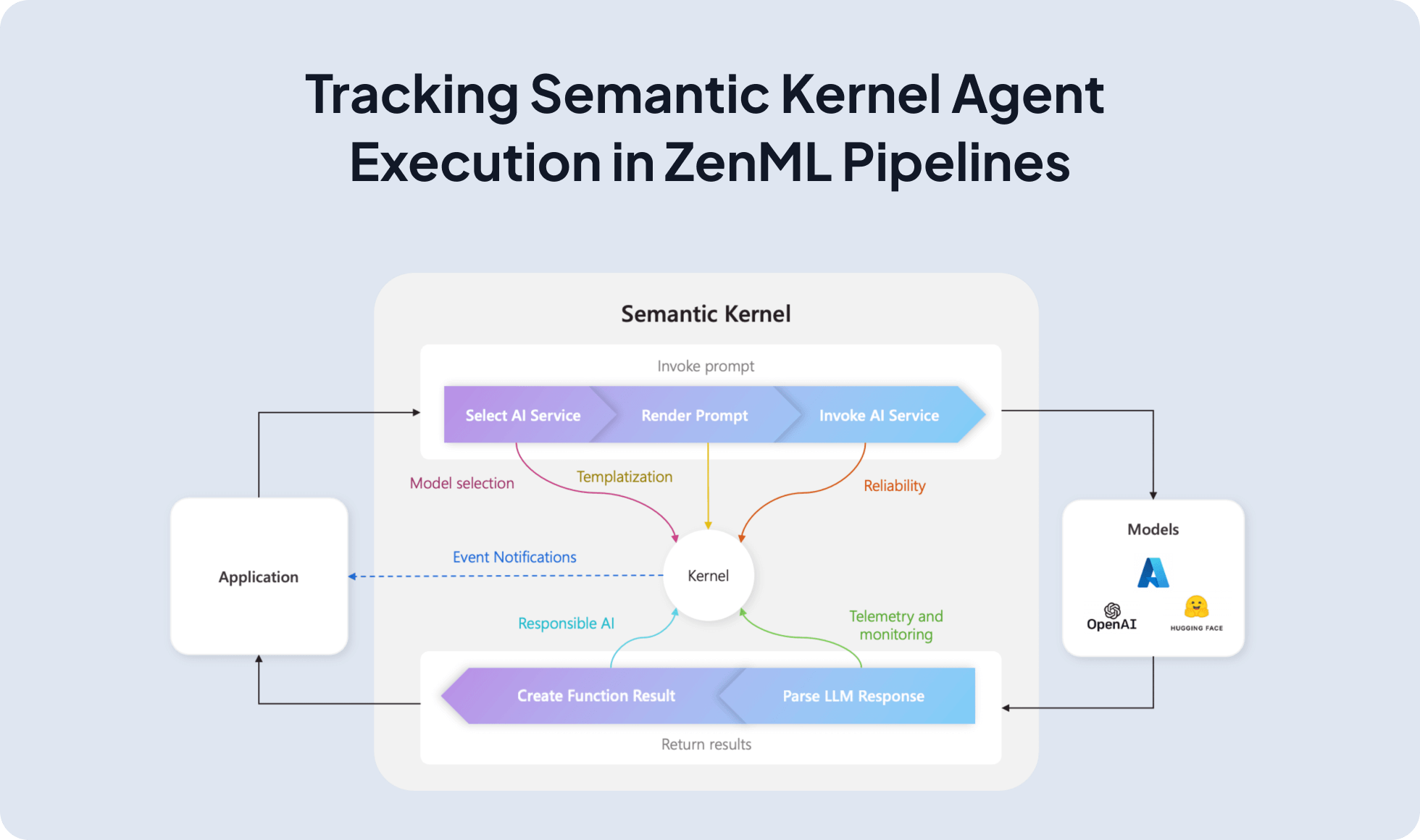
@kernel_function and compose them as plugins.from zenml import ExternalArtifact, pipeline, step
from semantic_kernel_agent import kernel
import asyncio
from semantic_kernel.connectors.ai.function_choice_behavior import FunctionChoiceBehavior
from semantic_kernel.connectors.ai.open_ai.prompt_execution_settings.open_ai_prompt_execution_settings import (
OpenAIChatPromptExecutionSettings,
)
from semantic_kernel.contents.chat_history import ChatHistory
@step
def run_semantic_kernel(query: str) -> str:
async def _run():
chat = kernel.get_service("openai-chat")
history = ChatHistory()
history.add_user_message(query)
settings = OpenAIChatPromptExecutionSettings()
settings.function_choice_behavior = FunctionChoiceBehavior.Auto()
resp = await chat.get_chat_message_content(
chat_history=history, settings=settings, kernel=kernel
)
return str(getattr(resp, "content", resp))
return asyncio.run(_run())
@pipeline
def semantic_kernel_agent_pipeline() -> str:
q = ExternalArtifact(value="What is the weather in Tokyo?")
return run_semantic_kernel(q.value)
if __name__ == "__main__":
print(semantic_kernel_agent_pipeline())Expand your ML pipelines with more than 50 ZenML Integrations